Insights / SOCIAL INFRASTRUCTURE
The social businesses holding communities together in crisis
By renae hanvin
Jan 21 2026
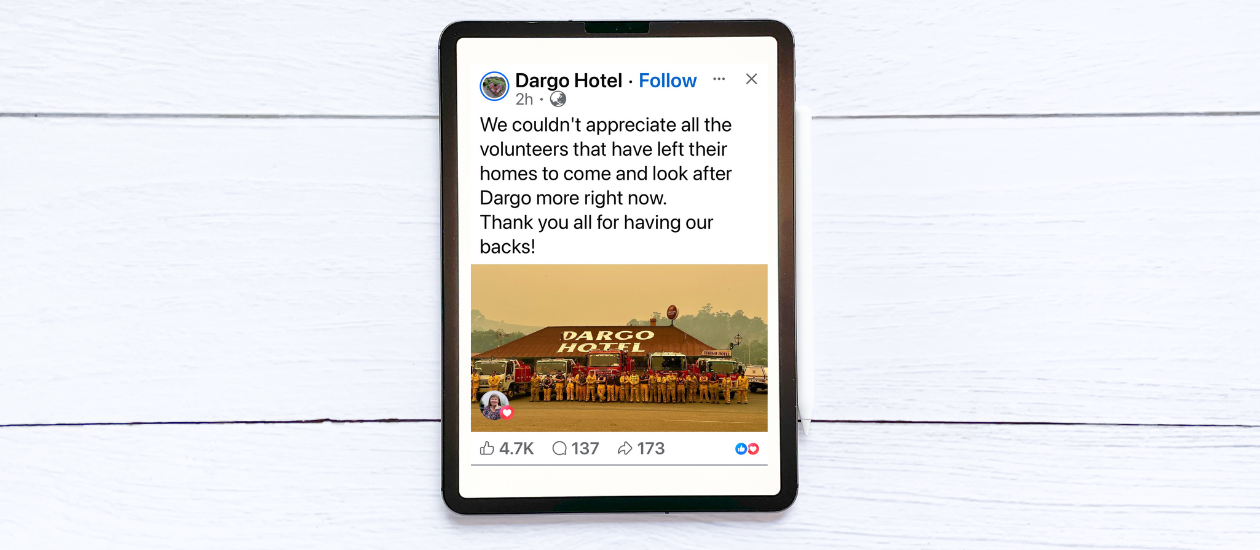
When disasters hit, we often focus on emergency services, government response and major infrastructure. All are critical. But quietly, consistently, and often without recognition, another layer of response is already in motion.
It’s happening at the pub on the corner. The petrol station on the highway. The general store, the caravan park, the café, the hardware shop.
These are social businesses… everyday, place-based businesses that do more than transact. They connect people, provide informal support, share information, and keep communities functioning when formal systems are stretched.
Right now, amid bushfires, floods, cyclones and prolonged recovery across Australia, these social businesses are doing what they’ve always done: stepping up.
What do we mean by “social businesses”?
Social businesses aren’t charities. They’re not NGOs. They are commercial enterprises with a social function embedded in how they operate.
They are trusted, visible, and deeply local. People know where they are, how to access them, and who runs them. In times of crisis, that familiarity becomes a form of infrastructure.
Find out more about the national descriptor and video explainer at Sociabli – our social capital + social infrastructure arm of Resilient Ready.
They are part of what we call Australia’s invisible infrastructure.
The pub: more than a place for a drink
Across disaster-affected regions, pubs often become:
-
Informal coordination centres for locals and volunteers
-
Meeting points for emergency services between shifts
-
Places where information is shared long before official updates arrive
-
Safe, warm spaces for people who’ve lost power, water or internet
In some towns, the pub is the only large indoor gathering space still operating. Its value during recovery isn’t just economic – it’s relational.
The petrol station: keeping communities moving
Petrol stations play a critical but often overlooked role during disasters:
-
Maintaining fuel access for emergency vehicles, generators and residents
-
Sharing real-time road and access information
-
Providing basic supplies when supermarkets are closed
-
Acting as an early warning point for changing conditions
When power is down or roads are cut, a single operational petrol station can determine whether a town stays connected or becomes isolated.
The general store: the heartbeat of small towns
General stores are often the last remaining service in smaller communities. During disasters, they:
-
Extend hours to support locals and responders
-
Offer informal credit when EFTPOS or banking systems fail
-
Share trusted information and reassurance
-
Check in on vulnerable customers without being asked
They are logistics hubs, communication nodes, and social anchors rolled into one.
Caravan parks: unexpected recovery infrastructure
Caravan parks frequently become frontline recovery assets:
-
Providing emergency accommodation for displaced residents
-
Housing recovery workers, tradies and volunteers
-
Supporting longer-term temporary living when housing is lost
-
Offering stability for families who can’t yet return home
Their flexibility and on-site management make them uniquely suited to prolonged recovery phases.
Cafés, bakeries and takeaways: restoring routine and dignity
It may seem small, but the ability to buy a coffee, a hot meal, or fresh bread matters deeply after disruption.
Local food businesses help by:
-
Restoring a sense of normality and routine
-
Creating informal meeting points for connection and information-sharing
-
Supporting mental health through familiarity and care
-
Remaining open even when margins are thin and stress is high
These moments of normalcy are powerful recovery tools.
Hardware stores, pharmacies and service trades
Other social businesses step in quietly but decisively:
-
Hardware stores supplying materials for clean-up and repairs
-
Pharmacies ensuring continuity of medication and health advice
-
Mechanics, electricians and plumbers prioritising urgent community needs
-
Laundromats offering clean clothes when homes are damaged
They reduce pressure on formal recovery systems simply by doing what they do best – locally, quickly, and with trust.
Why this matters for resilience
Social businesses are not a nice to have during disasters. They are functional infrastructure.
They:
-
Reduce isolation
-
Speed up informal response and recovery
-
Support mental health and wellbeing
-
Keep local economies alive
-
Strengthen trust between people and places
Yet they are rarely planned for, mapped, measured or supported as part of disaster preparedness and recovery frameworks.
What Resilient Ready sees on the ground
At Resilient Ready, our work with business communities shows this again and again:
When social businesses are prepared, connected and supported before disaster strikes, communities recover faster and stronger.
When they aren’t, recovery is slower, more expensive, and more fragile.
A call to recognise and invest
If we want more resilient communities, we must start recognising social businesses for what they are:
-
Anchors of connection
-
Enablers of response
-
Pillars of recovery
-
Partners in resilience
They are already doing the work. It’s time our systems, funding models and preparedness efforts caught up.
Because when the next disaster hits, it won’t start in a control room.
It will start at the pub, the servo, the general store – and the people who open their doors anyway.
Discover more about our social capital + social infrastructure work including the National Framework, global-first online mapping tool and descriptor videos at Sociabli.
Resilient Ready is a social enterprise delivering innovative solutions to enable every organisation to thrive before, during and after disasters. To keep updated on news and current projects, sign up to our newsletter.