This episode
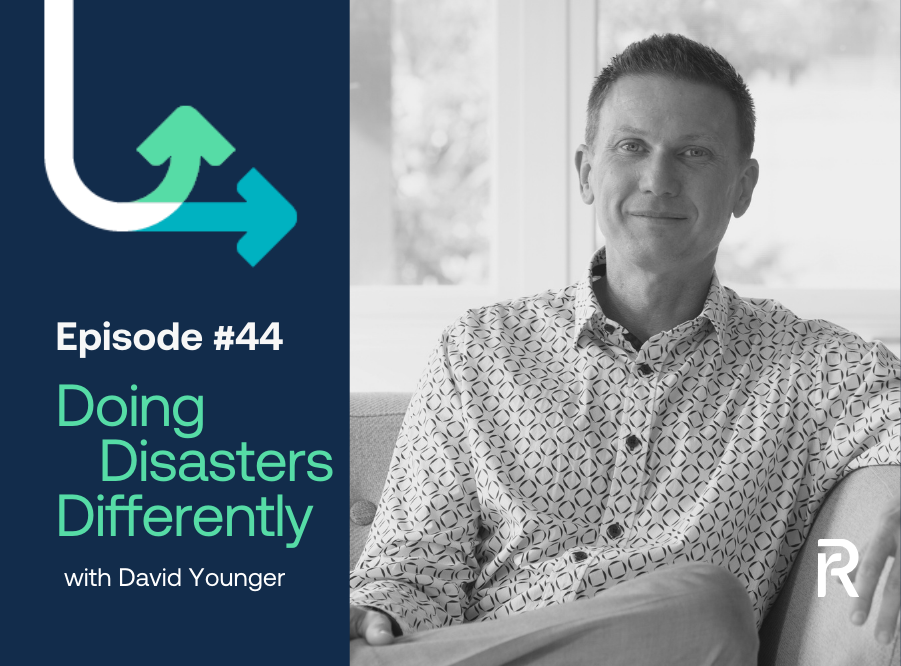
Renae is joined by David Younger, a clinical psychologist and consultant to governments and communities who is deeply passionate about stress and wellbeing when it comes to before, during and after disasters. David especially recognises the double impact that business people have and how important everyday self-care is so you can thrive through the unexpected challenges.
key moments from the conversation
Do you know what? I actually can’t remember when it was, but I reckon it is probably close to 10 years ago that I met with David and I heard about what he was doing and we sort of crossed paths. And then I ended up going to his consulting suites, I guess you’d call them at the time, which was in Box Hill in a suburb nearby to where I was working.
Speaker 1 (02:10):
So we met, we had a great chat. And to be honest with you, we found this passion around business people and the psychology and wellbeing of business people impacted by disasters.
Now, can you please tell me about the psychology of decision-making under stress and the connection with preparation, response, and recovery, and maybe even a little bit too about how you’ve got into this space or why you’re doing work in this space.
Speaker 2 (02:57):
Yeah. So maybe I’ll start with that second part first, Renee, and how I ended up working in this area, which really was by default. So that goes back to about 2006 even, 2007 when I moved out of Melbourne CBD and bought a house on the rural fringe in an at risk of fire area. And then as a pretty early on psychologist, I set up a practice in two at risk of bushfire communities or towns. And then, well, Veridi, if I just fast tracked to 2009 and the Black Saturday fires here in Victoria, I ended up being one of two psychologists in one of those townships. And so I was just really caught up in the aftermath of that tragic event and lived not far at all away from where the fire stopped. So I was caught up in the community aspect as well.
what is the psychological experience of recovery? Is that what that is, that experience that it’s-
Speaker 2 (11:18):
Yeah. Well, we could say that that can be the first state or stage for people, and then that following that, hopefully, and this is what we’re always working to support and assist people with, we want to help them understand what’s occurring for them in terms of reactions and responses, and then put in place strategies that are going to support them and help them to come down from that very high state of adrenaline-based stress, reestablish healthy functioning. But
Speaker 2 (11:45):
This is then where the second challenge comes in, in a disaster setting, which is that if you’ve lost a home or you’re a farmer who’s lost many fences and the cattle are walking around or you’re a business owner and your shop has been inundated with water, for example, you’re going to have a lot of decisions and challenges to face. And most of us will know just as a part of normal everyday life, when we go through phases where there are lots and lots of challenges facing us and lots of things on, that can push just our ordinary stress levels up.
So a question, what helps individuals and communities, but especially the business people cope and function better before, during, and after a disruption?
Speaker 2 (18:04):
Yeah. Well, I think what I’m going to mention could be applied right through communities, but absolutely applies to business communities and business people. And having worked with them, of course, previously, but I thought I’d summarize it in this way and we would do the before, during, and after. But I think an important point to make is that, well, for the before, having a good state of health and wellbeing is really crucial because everybody brings their own preexisting state of health and wellbeing, as well as their own preexisting unresolved life challenges and difficulties, however, there might be into a disaster experience. So in an ideal world, if we have got the best level of health and wellbeing as possible, and if we’ve got a nice balanced life with good outlets outside of work and we’re well connected amongst a range of other things, then that’s probably going to stand people in better stead for the very unfortunate experience of needing to go through a disaster.
Speaker 2 (19:06):
I mean, we could talk about before in a far more detailed way, but ultimately the health and wellbeing, not only physically, but emotionally is a really important foundation as we head into a disaster, as is, of course, our connection with others.
Speaker 1 (19:22):
And can I just … So before we talk about the during and after, I think that’s so important and really critical for small business people because I’m a small business person and we work many, many, many more hours than I would say the normal corporate person. And a lot of the time it paid under the average wage just to make ends meet and to get our businesses running. And I think we put so much passion and a lot of people, particularly again in regional areas, feel a lot of responsibility that they’re employing local people who have got to pay for their families and they’re delivering local services. So a lot of additional pressure and stress and I guess assumed responsibility comes on being a small business owner as well. So taking some time in the everyday business as usual to make sure that your wellbeing and your wellness and your mental capacity and you do spend some time putting into that beforehand is really critical.
Speaker 2 (20:19):
Yeah, absolutely. I guess something I’ve started mentioning just over the last 12 months, particularly for those people that are very committed to others, including those in their community is, well, compassion for others is fantastic, but there are three types of compassion, and another one is self-compassion. So we could think of taking time out for myself as actually being a really important expression of self-compassion. And if I want to be around to keep helping others, supporting others, running my business in order to provide benefit for the community, I’m going to have to look after myself. Everybody has a limit and everybody hits the wall eventually.
So David, I’m looking forward to what you say here. What two things, and I’m sure you’ve got many more, but what two things would you like to be done differently in the disaster space?
Speaker 2 (27:33):
Yeah, another great question. So here’s my opportunity. Well, given the now well-identified long-term nature of recovery, it’s very clear in the research, isn’t it? Both in Australia and worldwide. I think the very obvious changes that need to be made, that in Australia, we develop permanent ongoing recovery support systems and services like we have, I guess in many, many other areas. We just need that for disasters now. And I guess we see this unfolding in front of our very eyes even with what’s occurring at the moment, but the increasing frequency and intensity of disasters. So that’s number one. Number two is not necessarily an order of priority, but another one that’s very close to my heart. And that one relates to predicting the psychological safety and health and wellbeing of those that work in the disaster area.
Connect with David Younger