This episode
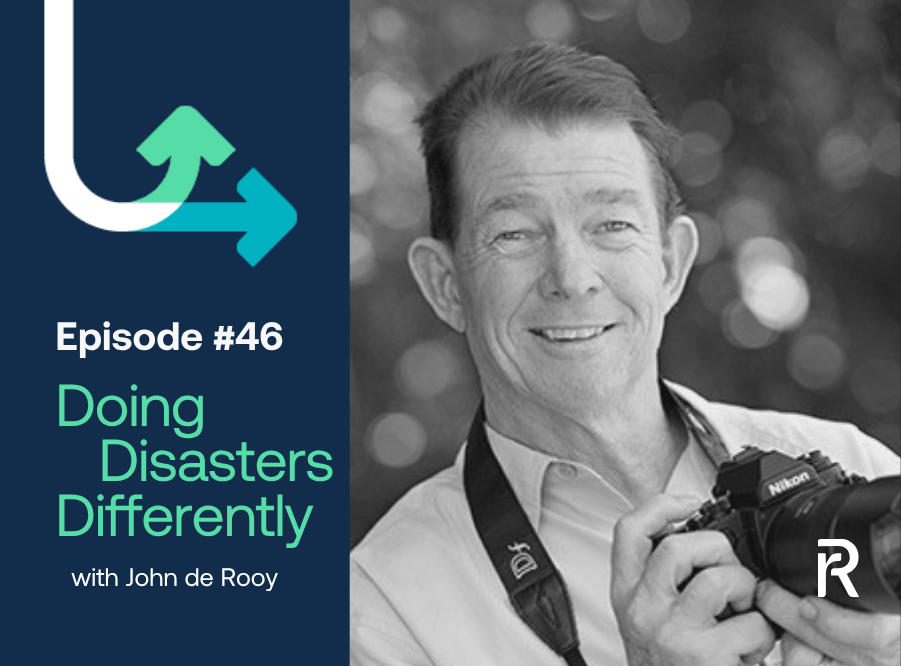
Renae is joined by John de Rooy, a respected business and community leader with a strong background in regional development and business chambers. A leader of the Malanda Chamber of Commerce in Far North Queensland, he’s spent years helping local businesses stay connected, supported, and resilient – especially in times of disruption.
This episode explores the vital role of business chambers in regional communities, highlighting how they foster resilience, support local businesses, and collaborate with emergency services to prepare for and recover from disasters. John de Rooy shares practical insights from Malanda, North Queensland, demonstrating the power of community-driven initiatives.
key moments from the conversation
John de Rooy is a respected business and community leader with a strong background in regional development and business chambers. A leader of the Malanda Chamber of Commerce in Far North Queensland, he’s spent years helping local businesses stay connected, supported, and resilient – especially in times of disruption.
I’d like to talk about where we met, and we haven’t met in person but had lots of great conversations on the phone led by the project we’re delivering in the Tablelands.
Now Malanda, tell me where is it and what’s it like running a business there?
John de Rooy (01:58):
Malanda’s about an hour and a half southwest of Cairns up in the mountains. So we’re about 750 meters above sea level. So even though we’re in tropical North Queensland, we have an ideal climate of living in the rainforest, a lot cooler, about seven or eight degrees cooler than the tropical coast. So ideal area to live. The weather is quite often wet and rainy because we live in the rainforest, but that’s really nice too. Malanda’s a small country town where the main industries here are dairying and farming and a famous Malanda milk factory. We have a population in town of just over 2,000 people and probably a further thousand people in the neighboring countryside. As of many country communities, we’re seeing strong population growth here as people search for a better lifestyle away from the city. To survive in business here, you need to be trusted by the local community and deliver consistent products and services that build your reputation.
(02:55):
We find that return business and consistent growth is largely driven by word of mouth in a small country town like Malanda.
Would you say that in Milanda, that particularly the small businesses are really central to a thriving, resilient town?
John de Rooy (03:53):
Yeah, definitely. I think speaking from my experience, small business here has to be very adaptive to be able to move quickly when things change, but also be part of the community, because I think being a trusted part of the community and business goes a long way to ensuring your business continues.
Now, business chambers, from your perspective, what role do business chambers play in strengthening community resilience in the before, during, and the after stages of disruptions?
John de Rooy (05:07):
Yeah, just speaking from my experience in Malanda, it’s fortunate that we have some volunteers in the Malanda emergency team that are also chamber members. So we’ve established a very good link between the emergency team and business in the town. This strong link now ensures that when we have an impending cyclone, we have at least 30 stakeholders from business, sporting and community groups who meet with a disaster emergency team to check off readiness for the whole community. And this group remains active all the way through to recovery. It’s very strong and all the leading business people are in it so they can prepare their business as well and ensure that the general public is looked after as well.
So what’s the future’s focus for the Malanda Business Chamber? What’s on your horizon?
John de Rooy (16:01):
Well, we’re currently building a new website as a vehicle for running a renewed membership drive. We’ve got 65 members in the chamber here, which is really good for a small small country town this size. It’s really positive. But we feel that if we can adequately explain the benefits of membership, particularly we’ve got a lot of newcomers to town, then there’s a good scope to increase the numbers. And our chamber, we have a vision which says to unite the Malanda Chamber of Commerce members to foster a sustainable progressive community. So the chamber’s continually looking for ways to improve deliverability for all the community. This means that’s equally an objective of ours as well as fostering good business practices. The good thing about this area too is that every small community group like the Lions Club, the CWA, the RSL, all these groups have great volunteers and we all get together with each other as well.
(16:57):
So the chamber becomes a bigger group in itself because of its relationships with other community groups.
Well, as I probably mentioned, the electricity issue is huge because Queensland’s such a diverse, huge place when you have power outages, it takes a long time to get things repaired. So a big improvement for areas the government could provide reliable backup power to mobile and NBN towers in the country, which means to have decent batteries and solar or decent generators to ensure the communications are not lost in long times of disaster. As I said earlier, we can find this a problem with an emergency occurring or just people’s mental health to be able to continue to communicate through times of disaster.
Secondly, I think there’s a real need to cater for the homeless and the people in need when we have these disasters to have a readily open place of refuge that people could come to and include in that area a home for their pets because we find that if we have a place of refuge, people won’t come to it if they need to leave their pets at home, of course.
Connect with John de Rooy