This episode
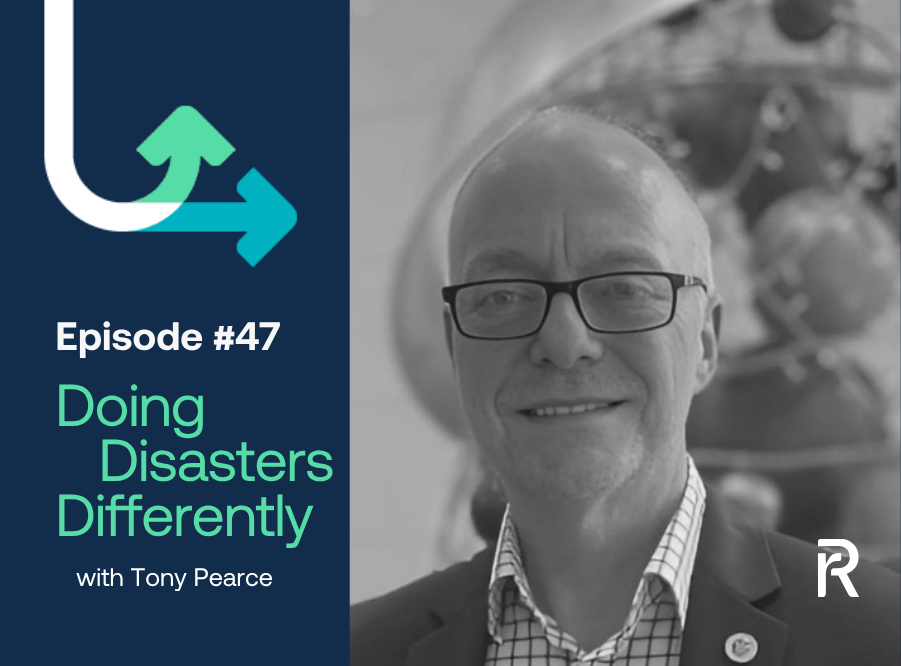
In this episode, I’m talking with Tony Pearce about Tony’s Trek.
Tony shares his inspiring journey of raising awareness for mental health in emergency services through daring treks, including walking from Melbourne to Brisbane, Everest Base Camp, and paddling the Murray River. Discover how community engagement, early intervention, and systemic change can improve mental health support for responders and their families.
key moments from the conversation
Tony Pearce is a former Inspector-General for Emergency Management in Victoria and now an advisor to Resilient Ready. With decades of leadership across ambulance, SES, and national emergency management, Tony brings deep expertise in crisis coordination and resilience. He’s also the driving force behind Tony’s Trek, a powerful initiative raising awareness of mental health and wellbeing in emergency services.
I met Tony over ten years ago when I was working at Australia Post. He was a speaker at an ECM program and I was so impressed by his approach that I wanted to hear more. So I asked him for a coffee and he kindly said yes. We’ve been having those coffees for many, many years and he’s been an amazing mentor to me as I entered and have grown in the emergency management and resilience sector.
OK, what is Tony’s Trek… what have you done before today and what’s coming up very soon?
Tony Pearce (02:17):
Thank you. Thanks for having me. It’s something that sort of started … Well, started back in 2023. The first Tony’s Trek started then, but it was about a year before that that I was sitting around ruminating about a whole range of different things. And there had been a bit of a rash around that time of emergency service workers who had been affected so badly by their mental health, not only in Victoria, nationally. There’d been a bit of a rash that had taken their lives and had been social media had sort of recorded the fact that those events had happened. And that’s only the ones obviously that we know because they were reported, but of course behind the scenes there are others that you just don’t hear about. And as I sat there just watching that unfold over a period of time, I thought to myself, there’s got to be a way to better raise awareness within our community about how difficult emergency work can be and what an impact it actually can have on the mental health of our responders, volunteer and paid.
(03:14):
And I was thinking about it from the perspective that emergency responders are not abstract entities. They are actually members of the community and they are members of people’s families and they are those things first. So from that perspective, I thought people really don’t understand unless they live with an emergency service worker who is unwell, just what an effect this can have. So I thought, what can I do to try and do something about that and raise some awareness about it? And at the time I was the chair of the Emergency Services Foundation. I’ve stepped down recently, but I’m still a director. And I thought, well, you’re in a position of privilege. You have a bit of a reputation, people know who you are, you work with all of the agencies and a lot of community areas through the foundation, use that as a platform to actually start raising awareness.
(03:58):
And then that’s all well and good because the next question I asked myself was, how do you actually do that? And I thought, well, there needs to be something that’s going to be big that people will ask you, why would you do it? Because that then opens the door for further questioning and further dialogue. So I thought, well, I’m going to go and do a really, really big walk and I’m going to walk to Queensland. I walked from Melbourne to Brisbane was my plan and that was the top of it.
___________
Tony, what was the moment or experience that pushed you to start Tony’s Trek, and how did your background in emergency services shape that decision?
Tony Pearce (07:56):
Yeah, look, excuse me, as I said, I guess I understand I’ve been in our sector now for way too long, very old, over 45 years. So I’ve been with it in a lot of organizations. I’ve worked with a lot of people in a lot of different scenarios and agencies and I’ve come to see over that period of time firsthand just how badly people could become affected by their mental health. So take away just that mad rush in 2022 that I was witnessing where it sort of triggered my mind to think about what can I do. My whole life has been witnessing and experiencing these things in others and also at a certain stage myself. Early days, of course, not realizing or understanding anything about what was going on, just accepting it for what it was and it was what it was. And you hear that, did you hear someone did this?
(08:48):
And we won’t be seeing him again and you go, “Gee, that’s terribly sad.” And then don’t even think about why or the cause of it, just move on as part of the job. But as we’ve become more sophisticated, I guess, and as we’ve got to learn a little bit more and have better understanding, I’ve also realized that for all of the efforts that go into and trying to help people with this, it doesn’t seem to be having the level of impact that we would really like it to have. Having worked for many organizations over many years, as I said earlier, I have seen a lot of people suffering with their mental health and they were struggling, but not really understanding what that was, what it meant, why it happened, and even having any idea at all about what we could do about it. But as we’ve progressed over those years, we’ve become a lot more sophisticated as a sector and society has become a lot better with regards to understanding what is happening and how to potentially try and have a positive impact on those that are struggling.
_____________________
During your past trek, what were some of the most powerful conversations or stories you heard from first responders about their mental health journeys?
Tony Pearce (13:28):
I think there’s a couple and you actually just, you just hit on a point which actually came out in the first big trek, which was the walking one, if you like, that I did over in the fire affected area. Over the period of that 50 days that I took to do that, there were around about 140 odd people who jumped in for 5Ks, 10Ks, some did a whole day walking with me on the side of the road as I was doing the trek and most of those people, or sorry, not most, many of those people were people who were actually suffering with mental health problems in emergency services. So they had taken the opportunity to come. And when I was talking to them initially, I said, “Why did you decide to walk with me? It’s a bit uncomfortable and you’re going to get blisters and that sort of stuff.
(14:07):
Why did you decide?” And they said, “Firstly, I decided because I thought, oh, well, if he’s doing it, I should jump in and give a hand, et cetera, et cetera.” But once I got started talking to them, inevitably they all came back to the same thing and without explicitly saying it, it had obviously created an opportunity for them in what was for them at that time a safe place to talk about their issue. And it wasn’t only to talk about them. I said a minute ago, you hit on something else. The bit that you hit on was the family side of it. They are the silent sufferers. You can have someone in your family, an emergency services worker who’s struggling with their mental health and yes, they’re sick and yes, it’s sad for them and it’s unfortunate for them, but at the very same time, their families are suffering too and the longer it gets and the worse the situation gets, the longer and worse it gets for those families as well.
___________________
From your perspective, what are the biggest gaps still existing in how we support the wellbeing of emergency service workers—and how can the sector help close those gaps?
But this is the thing, the sector, most people, if you say sector will think, oh, well, that’s the emergency service organizations. The entities with these people in them who do what they do day in, day out and who are being affected. So yes, the sector has to, but the sector’s part of a much bigger system.
(18:40):
So our systems including government as in elected government down for all of … And as I said, I’m not here to bank government or others. I don’t do that. I know they do what they can with what they’ve got, so that’s the first issue and you can’t address every single thing. But from a risk management perspective, if that’s all it is, then I think more has to be done at the front end. That’s the first thing. Work cover claims are through the roof and the emergency services. They are through the roof. So there is a tangible dollars and cents reason to do more if we can find ways to do more. Unfortunately, what that often means is you have to fund things. So again, it goes back to that early prevention and preparedness thing I talked about. You need to invest some money up the front end to save a lot of money down the track.
__________________
Looking ahead, what legacy do you hope Tony’s Trek leaves for future generations of emergency service workers, especially when it comes to normalising conversations around mental health?
Tony Pearce (24:24):
I think for me, it’s no idea where it is. I think for me it’s about conversations and it’s about triggering conversations. The more we can do, whether it’s what I’m doing, whether it’s what you do or others do, it doesn’t matter, but the more we can do that has part of its intended outcome to create conversations, the better we are going to be in the longer term.That’s really what it is. As I said, I was staggered in that 2023 event by how many people walked with me who I said to one guy, a fellow who a young bloke who was really struggling and on his first blotch, when I first met him and everything, he was bubbly, he was vibrant, he was ready to go and everything. About two and a half hours into the walk, all of a sudden the reality of what was for him was right there in front of me as I was talking to him and I’m no clinician, that’s just not why I’m just a black having a bit of a crack, but it was obvious to me then that this was something significant.
(25:25):
And I said to him at the end of it when we sat down at the fire station that he finished that were having a cup of coffee and I said to him, “So mate, what do you think about today? How’s your feet and everything?” And he goes, “Oh yeah, my feet are bloody sore.” He said, “However,” he said, “I can tell you now,” he said, “I don’t know you from a bar of soap.” He was just a young volunteer. He said, “I don’t know you from a bar of soap.” H said, “My captain suggested it might be good if someone came and did a bit of a part of the walk.” He said, “But if I met you in a pub, I would not have talked to you about the things that I talked about today.” He said, “I don’t know you. ” He said it personal.
(25:56):
And he talked about his family, sort of the impacts on his family. He was worried about some of the impacts on his young wife. He said, “I wouldn’t have talked to you about that anywhere at all. ” He said, “However, I felt comfortable.” He said, “I felt safe doing it. ” And I came back after that track and when I met with all the agency chiefs in a couple of forums when I was sort of talking, giving presentations on the track, I said, “The one thing I’ve learned is if we open the door and create a safe space, they will fill it. ” And that for me is, I reckon if you can just do that alone, then you can be as aspirational as you like about all the things you’d love to achieve, but you’ve got to get the starting point. And I think the starting point is creating the space and opening the door.
(26:36):
And if we can all do that, then I think we’ll be enough far better place down the track.
Tony Pearce (26:43):
It’s not actually rocket science at all. I’ve got no great way to how do you fix this. It’s not so much about how do you fix it, but it’s about how do you create the opportunity for it to get better for people
Tony Pearce (27:45):
There’s a couple of things, I guess everything you do that’s positive impacts on mental health, but they’re not mental health issues at all. They’re totally unrelated to that really. So I think the first thing is, again, with my history of employment and the things that I’ve done, I think one of the things I would like to see is down the track a move from community engagement to genuine community lead decision making. That’s one thing I’d like to see. We’ve done a lot and we’ve come a long way now in better understanding how do we engage with communities, but I think we’ve got that part nailed. I think the mechanisms and the structures about how you do that are quite clear, but now it’s about how do you then move that to genuine community led decision making and why would that significantly improve safety? I think with community led decision making, your improvements would be partly because people act on what they understand and what they own and not on what they’re told.
(28:44):
We’re really good for all the right reasons at telling people things and then expecting they go away and in some way they use it or benefit from it. But I’m not so sure that when you tell someone something they necessarily understand it properly and we’ve got to make sure we know that they understand it because if they understand it, they will then act on it and they’ll own it.
That’s important.
I was going to say, just to reflect on that. So I’ve been doing some work with the community in the city of Casey actually, and I’ve been working with them sort of behind the scenes. I don’t always promote everything that we do and we had our reflective catch up and there were a lot, actually a lot of CFA volunteers and CS volunteers as part of this group. So they are community as well. We did the normal survey reflection and I was like, “How did I help you, et cetera, et cetera.” And they basically were like, “Well, you helped us grow.” And I thought, I was quite touched by that because yeah, never ever would I ever go into a community and tell them what to do. And I think that’s what you’re sort of alluding to, that there’s a lot of the sector and the space that goes into aim to tell.
(29:54):
But if we foster the community people to grow to build their capabilities so they can and identify solutions and programs to support their emergency services, mental wellbeing, et cetera, et cetera, that benefits them, then that’s the golden outcome, isn’t it? That’s the best outcome for everyone.
Tony Pearce (30:12):
Yeah, absolutely. And you know as well as I do, that local networks consistently outperform formal systems in the early hours and days of Big events.
Renee Hanvin (30:22):
I have to hashtag social capital there, Tony, don’t I? I wasn’t going to mention it in this one, but I have to hashtag social capital. And so what’s the second thing to be done differently in the disaster space? And I kind of think you might say something about the funding beforehand maybe. I don’t know.
Tony Pearce (30:37):
Well, I think I’ve already mentioned that a couple of times. Yeah, obviously funding’s important. As I said, look, we all need money and we’re all backing for the same pot of dollars. So I don’t have a problem with the fact that not everyone can have everything they want. But in that sense, I think one of the issues that we do have is, let’s be really honest, funding is not necessarily allocated on risk and/or need. If it were, then a lot of people would get a lot more money because the true value in the longer term would be evident from funding those sorts of things, but that’s not what you get. So yes, I think if there are ways to find more appropriate ways to fund organizations based on true need, that would be very, very helpful. And the other thing I’d say very quickly, the one I was going to say, but you forced me down the funding track.
(31:23):
I think the other one I’d say is that turning lessons identified into true system-wide enforced James, and this probably doesn’t surprise you that I would come from this angle, one of my previous roles, but I think the gap, which is common globally too, it’s not just for us, is not identifying lessons. It’s actually not consistently implementing them across agencies and over time. And the agencies themselves, when government accepts recommendations from inquiries and reviews and so on, the agencies themselves will absolutely try to do their very, very best to implement what has to be implemented. But the problem there comes back again to a political will over a period of time that starts to drop off and also funding and funding availability.
Connect with Tony Pearce